Sri Lankan food guide: what to eat and how to order
Do not waste your trip on resort buffets. A fresh plate of rice and five curries at a local spot costs 2 EUR and tastes better than anything on a tourist menu.
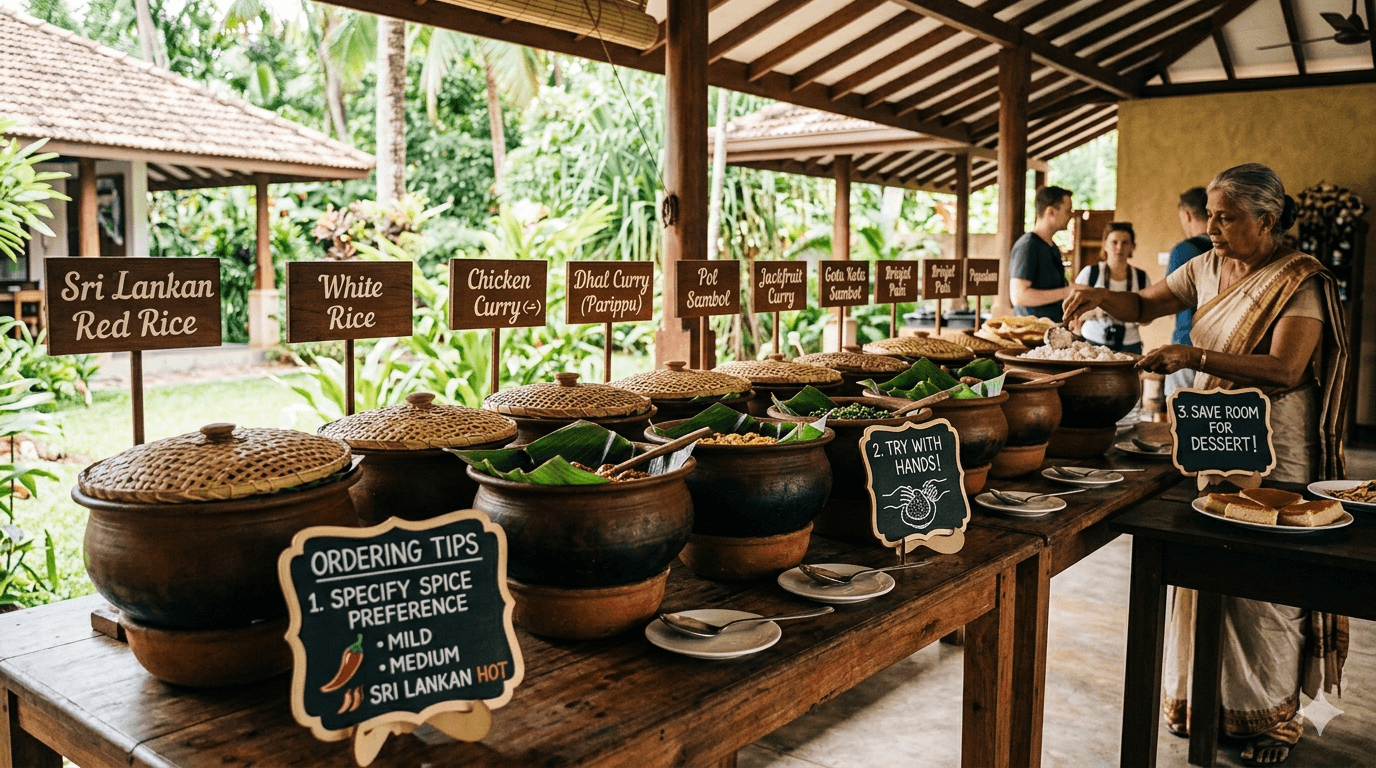
Do not eat rice and curry from a hotel buffet
This is the biggest mistake tourists make. They pay 15 EUR for a watered-down, unseasoned buffet at a large tourist resort and think that is what Sri Lankan food tastes like. It is not.
Buffet curries sit out for hours and lose all their punch. If you want the real experience, you need to find a small local spot—often called a "hotel"—where taxi drivers and shop owners eat.
A massive plate of fresh rice with five curries at a local spot will cost you roughly 2 EUR. It is cooked fresh that morning, properly spiced, and tastes ten times better than the resort food.
The Tea Rules: Plain vs. Milk
Sri Lanka is the home of Ceylon Tea. Brands like Dilmah are famous globally, but how locals drink it here might surprise you. Most Sri Lankans enjoy tea twice a day: morning and late afternoon.
Plain Tea (Kahata): This is black tea served without milk. It is strong, refreshing, and the most common choice.
Tea (Milk Tea): If you ask for "Tea" in a local shop, you will usually get it with milk. In local spots, this is often made with milk powder or condensed milk, making it rich and creamy.
The Sugar Warning
Sri Lankans love sugar. A standard cup of tea might have three spoons of sugar in it. If you prefer it less sweet, always say "No sugar" or "Sini aduwen" (less sugar) when ordering.
Rice and Curry: The 3-Meal Staple
In Sri Lanka, we eat rice for breakfast, lunch, and dinner. It is the heart of our food culture.
Breakfast
Expect rice served with a mild potato milk curry and a fresh Pol Sambol (coconut relish). Sometimes we eat Kiribath (Milk Rice), which is traditionally served for special occasions and the first of every month.
Lunch
This is the main event. A mountain of rice surrounded by five to six different curries. This includes Dhal (lentils), potato, a green leaf salad (Mallung), and a choice of fish or meat.
Dinner
Dinner is often lighter, like rice with a simple coconut sambol. Or you switch to flour-based favourites like hoppers or kottu.
The "Must-Try" List
Skip the tourist menus entirely. Look for these authentic local staples instead:
Egg Hoppers (Biththara Appa)
Bowl-shaped crispy pancakes made from fermented rice flour. Get the egg hopper for a perfectly soft-boiled egg baked right into the centre.
Chicken Lamprais
A Dutch Burgher legacy. Rice, chicken curries, and rich sambols baked slowly inside a folded banana leaf. It is rich, heavy, and completely unique.
Pol Roti
Thick, rustic flatbread made with grated coconut mixed into the dough. It is perfect when torn apart and dipped in a spicy chili paste (Lunu Miris).
Insider Ordering Tips
The "Hotel" Confusion: In Sri Lanka, many small restaurants are called "Hotels" (e.g., "New Central Hotel"). They do not have rooms. They just serve rice, curry, and short eats.
Wash Your Hands: Authentic food is eaten with the right hand. Every local restaurant has a sink in the dining area. Wash before and after you eat. It actually makes the food taste better.
Bring Cash: Small local shops and street vendors do not take cards. Read our guide on ATMs and handling cash to ensure you always have small notes ready.
Quick answers
Yes, it can be. Many curries like Dhal or Potato milk curry are mild and creamy. If you are sensitive, ask for "White Curry" or "Mild spice" when ordering.
Generally, yes. Look for stalls with a high turnover of local customers. Freshly made Kottu or Hoppers cooked right in front of you are usually safe and delicious.