A Sanctuary for silence
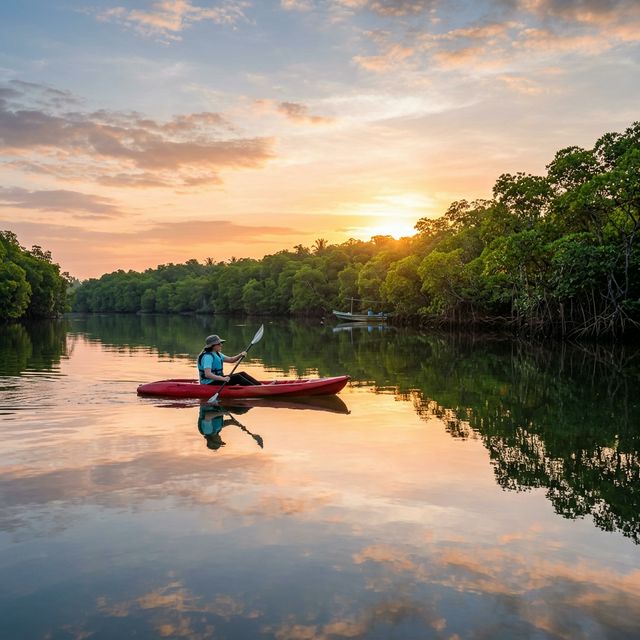
The Dodanduwa estuary is a vast lagoon system intertwined with dense mangroves. Crucially, no motor boats are permitted on these waters. The only sounds are the rhythmic dip of paddles and the calls of kingfishers.
If you are staying nearby in busy Hikkaduwa, the primary way to explore this contrast is via kayaking or stand-up paddleboarding. These are often led by local guides who know the intricate mangrove channels and wildlife habits intimately.
Wildlife encounters
- Water Monitors: Prehistoric lizards sunning on the banks.
- Birdlife: Kingfishers and eagles working the shallows.
- Giant Fruit Bats: Thousands roosting in the high trees.
Nature undisturbed
Because there are no engines to scare them away, the wildlife here is abundant and relaxed. Early morning (6am) is the best time for sightings, especially for the clouds of fruit bats returning to their roosts.
Once the morning sun gets too hot, you can head back across the main road to Dodanduwa Beach for a swim.
Island monastery
Polgasduwa: The Island Hermitage
Founded in 1911 by a German monk, this historic forest monastery was the first centre established for Western practitioners. It sits in the quiet centre of the lagoon, accessible only by rowboat.
Quick Answers
Polgasduwa is the forested island in the middle of the lagoon, home to the Island Hermitage Buddhist meditation monastery founded in 1911 by a German monk. It was the first centre of Theravada Buddhist practice for Western students anywhere in the world. Kayak tours pass the island and your guide will explain its history. Do not attempt to land. It is an active place of practice and retreat, not a tourist attraction.
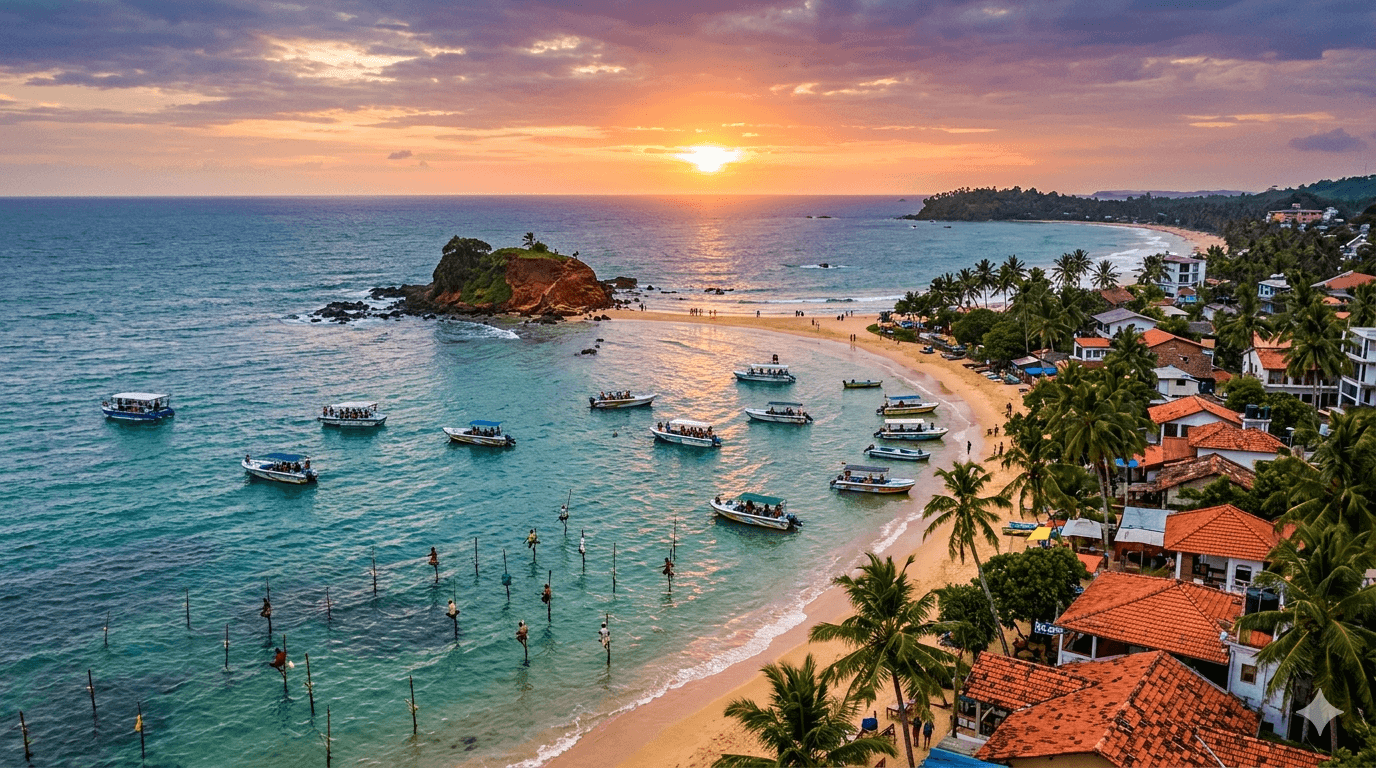
Two completely different places with similar names. Polgasduwa is the forested meditation island in the lagoon. Polgasgala is the dramatic rock outcrop in the ocean off Dodanduwa beach that you wade out to at sunset. One is in the lagoon, the other is in the ocean. Both worth visiting, completely separate locations.
Completely. The monitor lizards alone are extraordinary. The silence on motor-free water is something increasingly rare. The history of Polgasduwa island is fascinating. The physical experience of paddling at dawn with both the light and the wildlife active is one of the most beautiful things the south coast offers. Non-birdwatchers consistently rate this among their Sri Lanka highlights.
About 5km south of Hikkaduwa centre. Five minutes by tuk-tuk, 10 to 12 minutes by bus 388/1 or 388/3, or a pleasant 20-minute cycle along the coastal road. The proximity makes an early 6am start entirely practical from Hikkaduwa without needing to travel the night before.
Swimming is permitted in parts but it is not the main activity. The water is brackish and visibility is limited compared to the ocean. The main reason for caution is monitor lizards and occasional jellyfish in deeper channels. Your guide will advise on suitable areas during the tour. Most visitors paddle and observe rather than swim. The wildlife viewing from the kayak is the real attraction.