You drive past it without knowing it is there
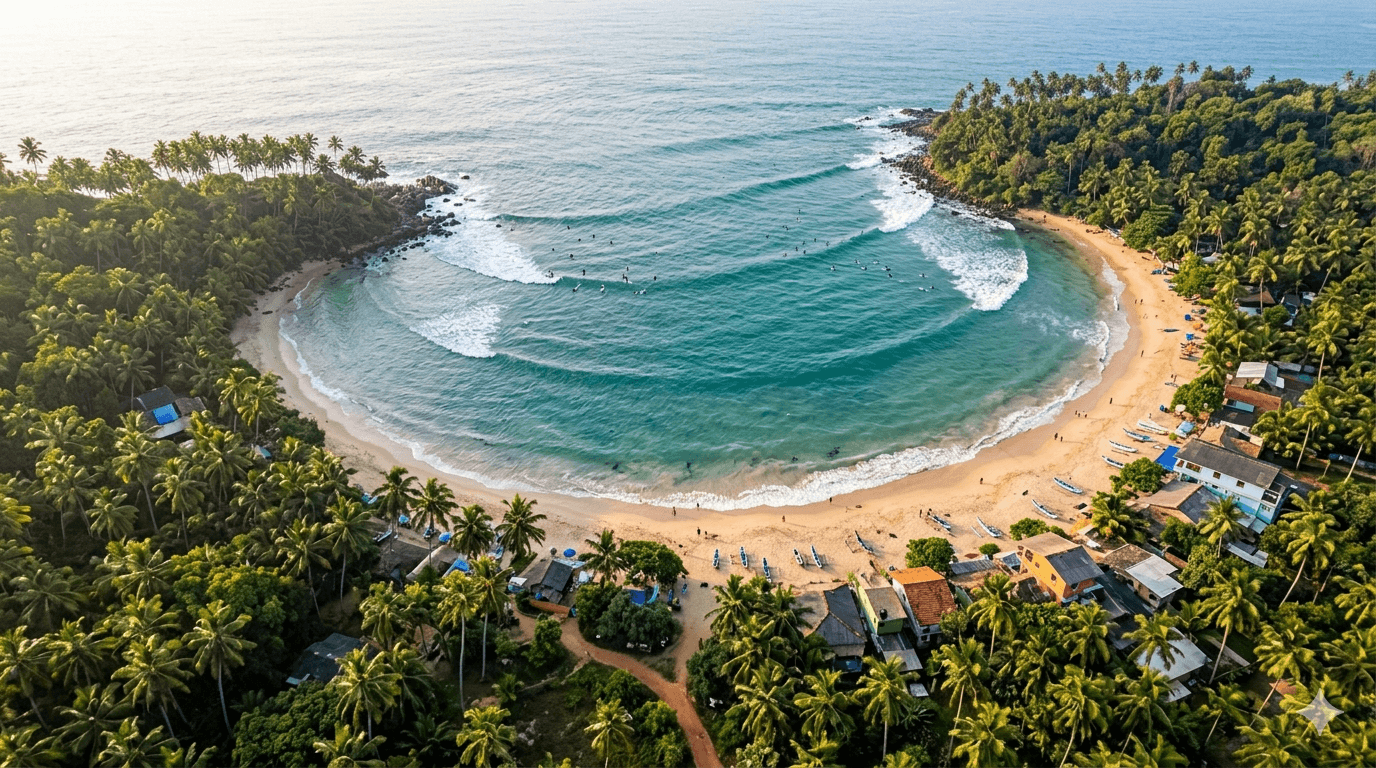
Hiriketiya sits off the main coastal road between Dickwella and Tangalle. No big sign. No obvious entrance. Just a small turn inland and suddenly you are in a horseshoe bay ringed with palm trees, boutique cafes, yoga studios, surf shops, and one of the prettiest stretches of turquoise water on the entire south coast.
It does not feel like most of Sri Lanka. That is the point. The food is better. The coffee is actually good. The places to stay have been designed rather than just built. It costs more than Hikkaduwa or Mirissa and most people who find it immediately understand why.
Locals call it Hiri. Europeans who visit tend to stay three days longer than they planned. It has that effect.
The bay itself
Hiriketiya is a horseshoe-shaped bay outside of Dickwella, fringed by palm trees and backed by jungle. The shape of the bay is what makes it work. It wraps around the water in a way that creates a naturally sheltered swimming area while still producing waves worth surfing. You can be in the water doing both at the same time, in different corners.
Sea turtles are a regular presence in the shallows. They usually hang out on the right-hand side of the bay where the water is shallower. You do not need to snorkel or book a tour. Just get in the water and wait patiently. Be still. They come.
The beach itself is not the widest on the south coast and the sand is not the most golden. It does not matter. The overall setting, the jungle behind, the bay in front, the quality of the light in the late afternoon, makes it one of the most beautiful spots on the island.
The vibe: Bali, but it is Sri Lanka
Most beach towns on the Sri Lanka south coast have a clear identity. Hikkaduwa is loud and fun. Mirissa is beach bars and whale watching. Galle is colonial elegance. Hiriketiya is something different.
The town has evolved into more than just a surf spot. The beach town now boasts a mix of cafes, restaurants, yoga studios, and even co-working spaces for digital nomads. Surf shops that would not look out of place in any cool coastal town. Places to get an actually good espresso. Brunch menus that take themselves seriously. Wood-fired pizza. Cocktail bars. Yoga retreats. Ice baths overlooking the bay.
The crowd this attracts is European and Australian, remote workers, surfers with some money, couples looking for somewhere that feels special without being a resort. If that is you, Hiriketiya will feel immediately right.
One honest note: the Hiri of old is clinging on for dear life, fighting the perils of over-tourism. It is not what it was five years ago. Peak season in December to February now brings real crowds. Come in November, March, or April for a noticeably better experience.
Surfing: genuinely good for all levels
The horseshoe-shaped bay is unique in that despite its small size, it has waves suitable for every level. Beginners tend to stick on the right on the beach break, intermediates float around in the middle, while experienced surfers sit out on the far left at the reef break. You can check the current wave size on the Surfline forecast before going.
Board hire on the beach costs roughly 3 EUR per hour. Several surf schools operate in the bay. Lessons are widely available and the instructors at the established schools know the water well.
One warning: at peak times in January and February the bay gets busy with surfers. You have to watch out so you do not get hit by a surfboard. Early mornings are significantly calmer and the waves are usually cleaner too.
If you are a complete beginner and nervous about crowds, Weligama further up the coast is actually a better place to learn. Hiriketiya rewards people who already have the basics.
Where to eat
The food scene here is well above average for a small beach town.
Roti Hut
A humble roadside stall on Hiriketiya Road. Fresh roti, rolls, and kottu at local prices. The hopper stand next door in the mornings is the best start to a surf day.
Budget • Cash onlyLemon Grass Cafe
Family-run daily staple. Sri Lankan classics done well, particularly the kottu. Some of the best local food on the south coast according to regulars.
Mid-range • Local favouriteDots Bay House
The social hub of Hiriketiya. Good food, cold drinks, live music nights. Great atmosphere, though prices are a little higher than the village average.
Mid to high rangeSmoke and Bitters
Named one of Asia's 50 best bars. A proper gastronomy experience built around wood-fire and smoke. Book ahead as it sells out quickly.
High end • Reservation essentialWhere to stay
Budget (25 to 50 EUR/night)
Guesthouses and homestays
Family-run places tucked into the jungle slightly back from the beach. Clean, simple, and friendly. The White House guesthouse is a consistent recommendation for those wanting to stay close to everything without paying boutique prices.
Mid-range (60 to 120 EUR/night)
Boutique hotels and surf camps
Salt House is the standout. Pool, yoga shala with jungle views, and beautifully designed rooms. Several surf camps here offer all-inclusive packages that make the trip easy for those focusing on the waves.
Splurge (120+ EUR/night)
Villas and treescapes
MOND Treescapes sits in the jungle with the kind of architecture that defines modern Sri Lankan style. Minimal, open, and completely integrated into nature. Perfect for a special occasion or a once-in-a-lifetime stay.
How to get there
From Matara
Matara is the nearest transport hub. Take any local bus heading east to Dickwella. From Dickwella, a 5-minute tuk-tuk ride (≈ 1 to 2 EUR) will bring you direct to the bay.
From Galle or Mirissa
Take a bus towards Matara/Dickwella. From Mirissa it is about 45 minutes; from Galle about 1.5 hours. A direct tuk-tuk from Mirissa is around 3 EUR and much more convenient with luggage.
Need a Direct Transfer?
Since ride apps are unreliable this far east, sorting out transport with heavy luggage can be frustrating. I can arrange direct, comfortable car or van transfers from Hikkaduwa, Galle, or the airport straight to your hotel in Hiriketiya.
WhatsApp Me for TransfersQuick Answers
Completely. The cafe scene, yoga studios, and the chance to swim with turtles make it worth visiting even if you never touch a surfboard. The atmosphere alone is one of the most relaxing on the island.
Yes, regularly. They frequent the right-hand side of the bay where the water is shallower. Be still and patient, and they often come surprisingly close to shore.
The quality of food and boutique accommodation is simply higher than the south coast average. You are paying for a more curated, 'Bali-style' experience that you won't find in larger hubs like Hikkaduwa.
Know someone planning the south coast? Send them this before they miss it.
Contact Rochana on WhatsApp