Sri Lanka hospital and emergency guide for tourists
How to navigate doctors, hospitals, and emergency contacts as a tourist.
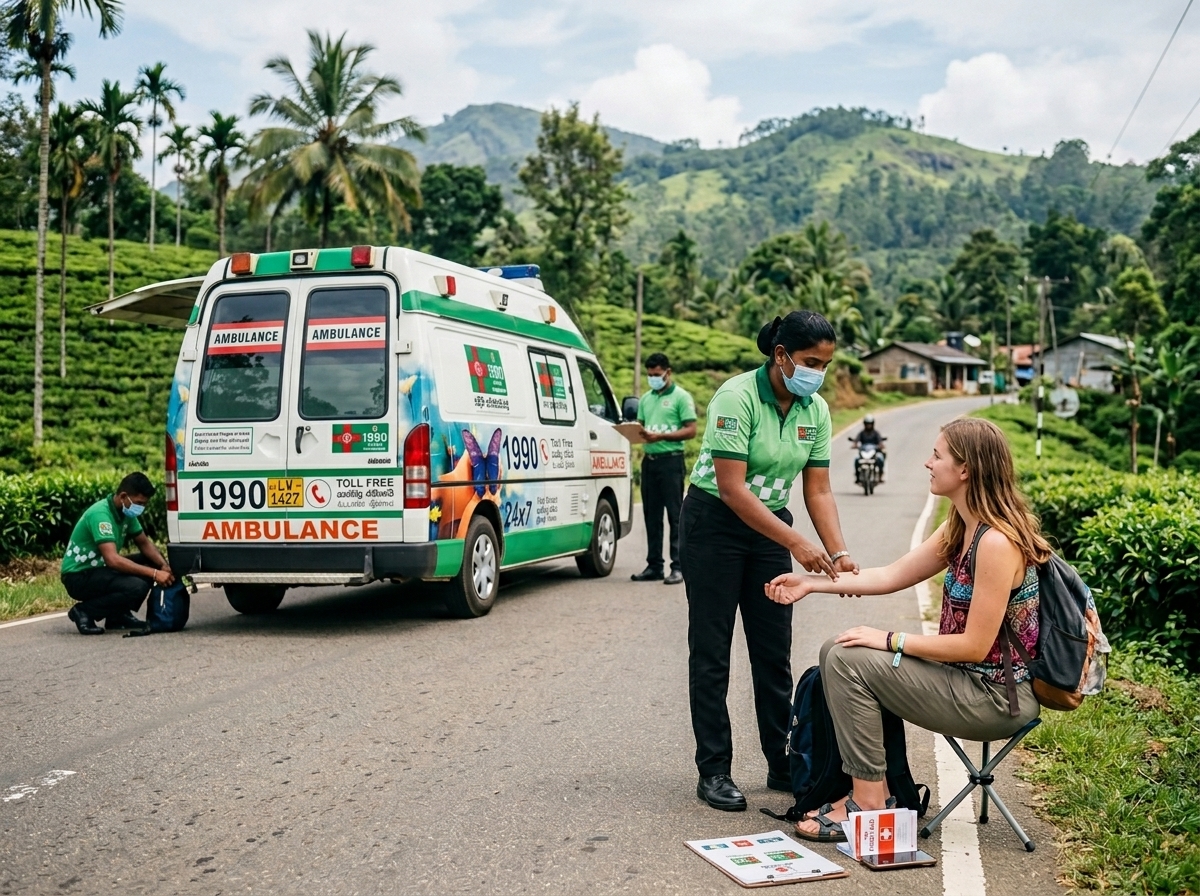
Crucial Emergency Contacts
Save these numbers in your phone before you travel. Operators for these services are accustomed to assisting foreign visitors.
1990 - Suwa Seriya Ambulance
This is the national ambulance service. It is highly efficient, staffed with trained paramedics, and operates nationwide. If you have a medical emergency anywhere on the island, this is the number to call.
119 or 118 - Police Emergency
The central dispatch for police assistance. For immediate danger or severe accidents, call 119.
Tourist Police
Sri Lanka has dedicated Tourist Police stations designed specifically to help foreign visitors. They are stationed in major tourist hotspots including Colombo, Galle, Kandy, Ella, and Arugam Bay. For non-life-threatening issues (like lost passports or theft), search for the nearest Tourist Police station on Google Maps.
The Healthcare System Explained
Sri Lanka has a dual healthcare system: Government hospitals and fee-paying Private hospitals. Both systems have Outpatient Departments (OPD) for walk-in patients.
Government Hospitals
They have excellent technology and the best doctors, but they are incredibly crowded. Important: While healthcare is free for locals, foreign tourists are required to pay a fee. They operate on a tiered system:
- Rural Hospitals: For basic needs in remote areas.
- Base Hospitals: More advanced care in mid-sized towns.
- National/Teaching Hospitals: Located in major cities. For severe accidents or major emergencies, locals always choose Government Teaching Hospitals.
Private Hospitals
Every major city has private hospitals. They offer faster service, private rooms, and less waiting time. This is usually preferred by tourists with travel insurance.
- Colombo Hubs: The highest-tech private hospitals are in Colombo (e.g., Nawaloka, Lanka Hospitals, Asiri Hospital).
- Tourist Areas: Popular coastal and hill country towns usually have smaller, well-equipped private hospital branches.
Travelling without insurance?
Private hospital bills add up fast. SafetyWing covers emergency medical care and hospital stays from around 42 EUR per month. No home country visit required to buy it.
Minor Illnesses & Appointments
The Local Secret: "Dispensaries"
Do not waste half a day in a massive hospital queue for a simple problem. If you have a minor issue like the flu, a small cut, or a stomach bug, go to a Dispensary.
Every village has these small medical centers. They are run by fully licensed doctors who work at Government Hospitals during the day and run these private clinics after hours. It is the fastest, most reliable way to get a prescription or basic treatment for common travel bugs.
How to Book a Specialist
If you need to see a specialist (dermatologist, orthopedic, etc.), you can channel them very quickly through private hospitals. You can walk into any private hospital to make an appointment, or book it instantly online through national portals:
Quick answers
Yes. Medical education in Sri Lanka is conducted entirely in English. Virtually all doctors, specialists, and pharmacists speak excellent English, making communication regarding symptoms and medications very straightforward.
Pharmacies in Sri Lanka are well-stocked. Basic medications like paracetamol (Panadol), antihistamines, and basic first-aid supplies are available over the counter. Antibiotics and specialized medications require a doctor's prescription.
No. While citizens receive free healthcare, foreign passport holders are billed for treatment at government facilities. The fees are standard and typically much lower than private clinic rates, but you should always carry your travel insurance details.